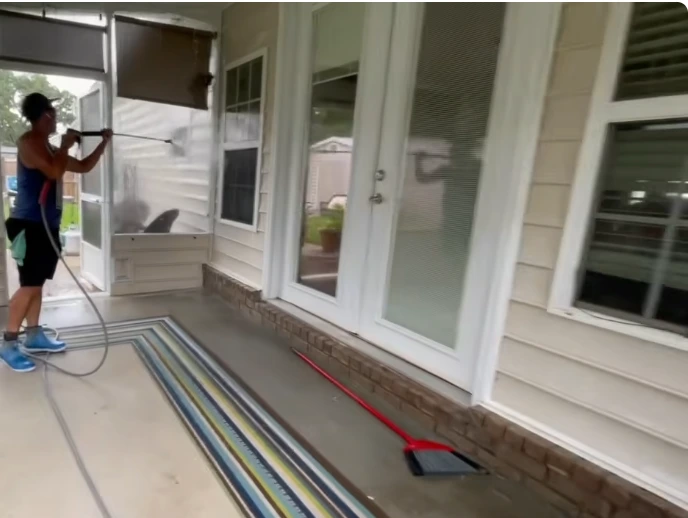

How Often Should You Pressure Wash Your Home in Springfield MO?
How Often to Pressure Wash Your Springfield MO Home
Direct answer: Most Springfield, MO homes benefit from exterior pressure washing once per year — ideally in spring (April–May) before peak algae season or early fall (September–October) before freeze-thaw winters begin. Homes under heavy Ozark tree canopy, north-facing walls, or properties near watercourses like the Finley River in Ozark should clean every 6–9 months. Post-treatment algicide after each cleaning extends results to 12–18 months.
Springfield, MO homeowners get this question wrong in two different directions. Some clean every year — which is right for most properties — but skip post-treatment, so the algae returns in 4–6 months and they wonder why they’re seeing green again before the next scheduled clean. Others wait 3–5 years between cleanings, let organic growth establish deep into surface pores and concrete cracks, and then need significantly more time and chemical to restore the surface. Neither approach accounts for what actually matters: your specific property’s exposure to Springfield’s climate factors. The right cleaning frequency is determined by shade, surface material, proximity to trees and water, and what was done at the last cleaning. This guide gives you the complete picture.
WHY SPRINGFIELD IS DIFFERENT
Does Springfield’s Climate Require More Frequent Cleaning Than Other Cities?
Yes — and significantly so compared to drier Midwest cities. Springfield’s combination of factors creates one of the most algae-accelerating climates in the Midwest:
73–77% year-round humidity — algae and mold germinate and spread above 60% relative humidity. Springfield rarely drops below that threshold even in winter. This means Springfield exterior surfaces are never in a truly hostile environment for organic growth — even in January, conditions allow slow biological activity.
46+ inches of annual rainfall — 21% above the US average. Frequent rain keeps exterior surfaces wet for extended periods, providing constant moisture for algae colonization. Springfield’s spring season brings extended periods of consecutive wet days that deposit layers of pollen, debris, and moisture on every horizontal and vertical surface.
Ozark tree canopy — Springfield’s heavy hardwood coverage keeps many siding faces and driveways in extended shade after rain events. Shaded surfaces retain moisture significantly longer than sun-exposed ones, multiplying the effective wet period that drives algae growth.
Missouri’s freeze-thaw cycles — 16–20 annually — drive moisture into concrete and surface materials during winter. Organic growth on concrete holds moisture against the surface through winter, accelerating freeze-thaw damage. Annual cleaning removes this risk before winter sets in.
By comparison: a home in Kansas City with similar construction but Springfield’s lower average humidity and lower rainfall would typically need cleaning every 18–24 months. The same home in Springfield needs it annually. To understand exactly what grows on Springfield homes and why, see our guide to mold and algae in Springfield’s climate.
BY SURFACE TYPE
How Often Should Each Surface Be Cleaned in Springfield MO?
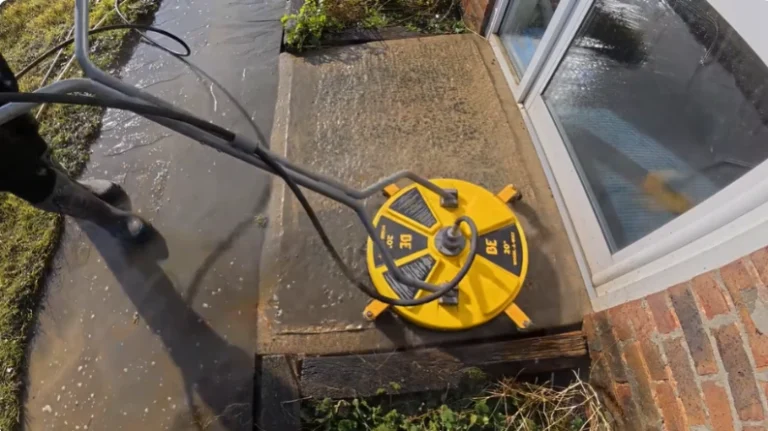
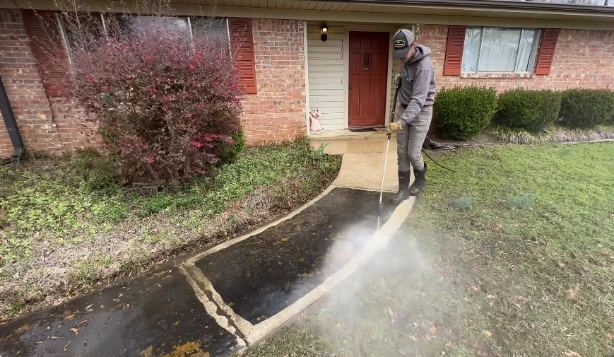
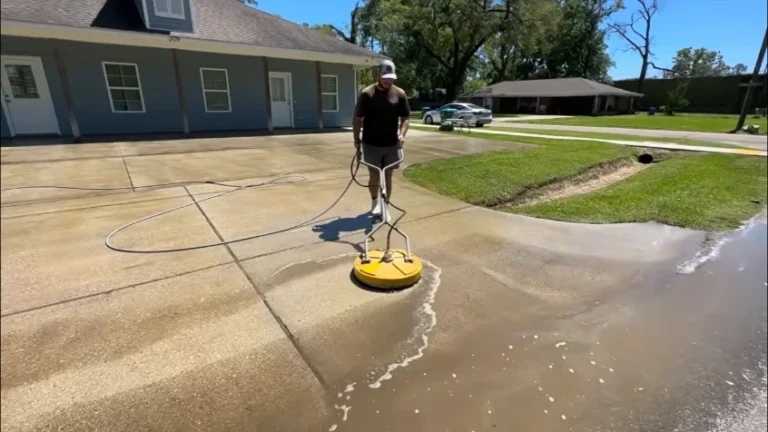
Driveway and concrete (annually) — Most Springfield driveways benefit from annual cleaning — spring is ideal. Algae and Gloeocapsa Magma colonize concrete pores within one growing season. With post-treatment algicide: extend to 12–18 months. Without it: expect visible green return in 4–6 months in Springfield’s climate. Learn more about driveway cleaning in Springfield MO.
House siding (annually) — Once per year covers most Springfield siding maintenance needs. Soft washing with post-treatment mold inhibitor keeps siding clean for 12–24 months under normal conditions. North-facing or heavily shaded walls — under oak or maple canopy — may need 9–12 month cycles instead. See our house washing service for details on the soft wash method.
Decks (annually to every 18 months) — Wood decks in Springfield benefit from annual cleaning. The constant humidity means mold penetrates wood grain faster here than in drier climates. If you’re planning to stain or seal, clean first regardless of when the last cleaning was. Composite decks can often go 18 months between professional cleanings with post-treatment applied. Read our deck cleaning guide.
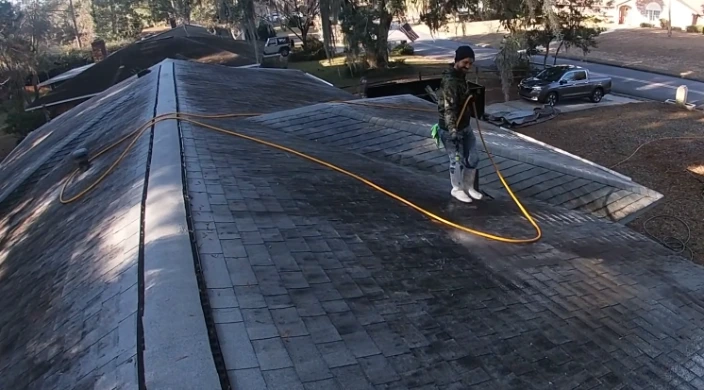
Roof (every 2–3 years) — Gloeocapsa Magma on roofs is a slower-developing problem than driveway algae. Most Springfield roofs need professional soft washing every 2–3 years — sooner if dark streaking is visible from the street or if the roof is heavily shaded. Post-treatment algicide after roof soft washing extends this to 3–5 years.
Fences (every 1–2 years) — Wood fences under tree canopy: annual. Open, sun-exposed vinyl fencing: every 18–24 months. Wood fences are particularly susceptible to Springfield’s tannin staining from oak and sweet gum leaves accumulating at the base.
Is Your Springfield Home Due for a Cleaning?
Annual cleaning is the baseline for most Springfield properties — get a free written quote and know exactly what your home needs.
Get a Free Written Quote
Call 877-302-9335
Mon–Sat 7:00 AM–6:00 PM · Sunday Closed
BY PROPERTY SITUATION
Does My Springfield Neighborhood or Property Affect How Often I Should Clean?
Heavy tree canopy properties (clean every 6–9 months) — If your Springfield property has mature oaks, maples, or sweet gums with canopy extending over your roof, driveway, or siding, you’re in the highest-frequency cleaning category. The shade extends wet periods dramatically — a shaded north-facing driveway in a Springfield midtown neighborhood can go visibly green within 4–6 weeks of cleaning without post-treatment. Post-treatment algicide is essential for these properties and extends results to 10–14 months.
Near-water properties in Ozark and Greene County (clean every 9–12 months) — Properties near the Finley River in Ozark, Wilson’s Creek in Republic, or any Springfield-area watercourse experience elevated ambient humidity compared to inland properties. The combination of river moisture and Springfield’s already-high baseline humidity accelerates biological growth on all surfaces.
Open, sun-exposed Springfield properties (annually or 18 months) — Properties in newer Republic or Battlefield subdivisions with smaller, younger trees and more sun exposure can go 12–18 months between cleanings when post-treatment algicide is applied. Sun-exposed concrete is naturally more hostile to algae than shaded surfaces.
Pre-listing Springfield properties (whenever — before photos) — If you’re listing your Springfield home, clean the exterior regardless of when the last service was. 97% of real estate agents say curb appeal affects sale price. A clean exterior before listing photos costs $179–$650 and can add $3,500–$8,850 in perceived value on Springfield’s median $177K home.
New construction (within first year) — New concrete and new siding in Republic, Nixa, and other Springfield-area new construction neighborhoods should be cleaned in year 1–2. New concrete is more porous than traffic-compacted older concrete — it colonizes with algae faster in Springfield’s climate. Getting ahead of this with a first professional clean and post-treatment algicide sets the foundation for longer intervals going forward.
THE SPRINGFIELD SEASONAL CALENDAR
What Is the Best Time of Year to Pressure Wash in Springfield MO?
Spring — April to May (BEST WINDOW) — The optimal cleaning window for most Springfield homeowners. Post-winter grime, pollen accumulation, and early-season algae growth are all present. Cleaning in April–May removes the winter buildup before summer heat amplifies algae growth. Temperatures are mild enough for cleaning solutions to work effectively. This is Springfield’s peak booking season — schedule early.
Summer — June to August (ACCEPTABLE) — Effective but not ideal. Springfield’s summer heat causes cleaning solutions to dry faster on surfaces, reducing dwell time effectiveness. Morning cleaning appointments (before 10 AM) are preferred in summer to avoid this. Algae is at peak growth rate in Springfield’s summer — if you see visible green, clean regardless of season.
Fall — September to October (SECOND BEST WINDOW) — Excellent second window. Leaf tannin staining from Ozark hardwoods is present and can be addressed before winter sets in. Fall cleaning prepares concrete for freeze-thaw season — removing organic growth that would hold moisture against the surface through winter expansion cycles. Less demand than spring — easier to schedule.
Winter — November to March (LIMITED) — Not recommended for most Springfield exterior cleaning. Temperatures below 40°F reduce the effectiveness of sodium hypochlorite cleaning solutions. Freeze risk on rinsed surfaces is a safety concern. Exceptions: unusually mild Missouri winters where temperatures are consistently above 45°F, or urgent pre-sale situations where timing can’t be adjusted.
HOW TO EXTEND YOUR CLEANING INTERVAL
What Can I Do to Make Professional Pressure Washing Last Longer in Springfield MO?
Post-treatment algicide (most important) — A professional-applied algicide after every cleaning is the single most effective way to extend results in Springfield. Without it: expect visible algae return in 4–6 months. With it: 12–18 months for most Springfield properties, up to 24 months for sun-exposed properties.
Tip: Always ask whether post-treatment is included in your quote — it’s the single biggest factor in how long your cleaning lasts in Springfield’s climate.
Trim overhanging branches — Every branch removed from over your driveway or siding reduces the shade that keeps surfaces damp and reduces the organic debris (leaves, pollen, sap) depositing nutrients for algae. This is the highest-impact DIY action Springfield homeowners can take between professional cleanings.
Clean gutters before exterior washing — Clogged gutters overflow onto siding, creating water channels that accelerate algae growth in specific vertical strips. Clean gutters before or at the same time as exterior washing.
Address downspout discharge — Downspouts discharging directly onto driveways or patios create permanently damp zones. Extending downspouts to discharge onto grass — a $10–$30 fix — eliminates one of the most reliable algae colonization points on Springfield properties.
How Often to Pressure Wash: Springfield MO Questions, Answered
Frequently Asked Questions
Keep Your Springfield Home on Schedule
One professional cleaning a year — with post-treatment algicide — protects your siding, driveway, and roof through every Springfield season. Get your free written quote today.
Get a Free Written Quote
Call 877-302-9335
Mon–Sat 7:00 AM–6:00 PM · Sunday Closed